
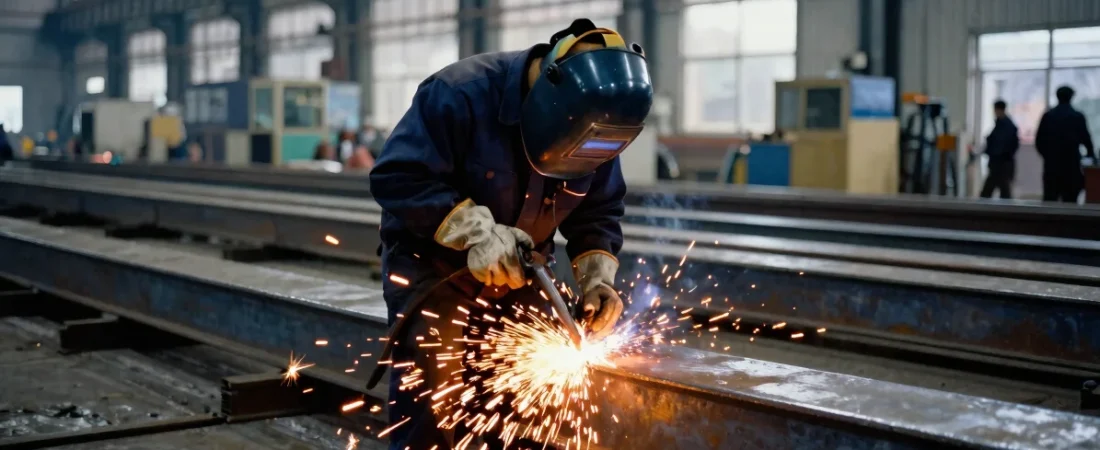
Many of the oxy-fuel welding and cutting tools sold worldwide, from cutting torches and welding handles to tips, regulators and complete kits, are made in China. Buying directly from a manufacturer can lower your cost and let you sell under your own brand, but it also puts more of the quality and logistics work on you. This guide walks through the sourcing process step by step, based on how we work with distributors at our factory in Ningbo.
Why buyers source welding and cutting tools from China
- Factory-direct pricing: buying from the manufacturer removes at least one layer of margin.
- Private label: most factories can laser-etch your logo and pack products in your own boxes or carry cases.
- Range: one supplier can often provide torches, tips, attachments, regulators and kits in several regional styles.
- Manufacturing clusters: Ningbo and the surrounding Zhejiang region are home to many brass machining and gas equipment factories, which helps with parts supply and lead times.
Step 1: Define exactly what you need
A clear specification saves weeks of back-and-forth. Before you contact suppliers, list:
- Products and quantities per model (torches, attachments, tips, regulators, kits)
- The torch styles your market uses, for example Victor-type, Harris 62-3F type, Brazil-type or French-type
- Fuel gases and the tip series needed for each
- Hose connection and cylinder connection standards for your market
- Any standards or certifications your customers or regulators require. Common references include ISO 5172 for torches, ISO 2503 for regulators and ISO 5175 for flashback arrestors
- Packaging: individual boxes, blow-mold carry cases, retail cards and manuals in the local language
If you are still deciding which torch styles to carry, our cutting torch buyer’s guide and Victor vs Harris comparison can help.
Step 2: Shortlist manufacturers, not just sellers
Many online listings come from trading companies. They can be useful, but for technical products like gas equipment it pays to work with, or at least verify, the actual factory. Ask suppliers which processes they do in-house (brass machining, assembly, testing), how many torches they produce per year, and which markets they already export to. A factory that focuses on oxy-fuel equipment will usually answer technical questions quickly and in detail.
Step 3: Order samples and test them properly
Samples are the single most useful step in the process. When they arrive, check:
- Fit: tips and attachments fit your existing ones where compatibility matters
- Machining: clean threads, smooth tip seats and no burrs
- Valves and lever: smooth, precise adjustment and full shut-off
- Leaks: a soapy-water leak test on all joints at working pressure
- Flame: a stable, well-shaped preheat flame and a clean cutting jet on a test cut
- Packaging and markings: logo, labels and manuals as agreed
Many factories provide free samples and ask the buyer to cover express shipping. Treat the approved sample as the reference for your production order.
Step 4: Ask how quality is controlled in production
For gas equipment, testing should be part of production, not an afterthought. Ask which tests are done on every unit and which on samples from each batch. Reasonable expectations for torches are a gas-tightness (leak) test on every unit, a flashback test, visual inspection of finish and markings, and a batch audit before packing. Ask for test records with your quote and with each shipment. Our quality page shows how we check torches, tips and regulators.
Step 5: Agree on the commercial terms
Get these points in writing in the quotation and proforma invoice (PI):
| Term | What to agree | What is common |
|---|---|---|
| MOQ | Minimum quantity per model and per order | Often a few hundred units per model |
| Price basis | Incoterm and port, e.g. FOB Ningbo | FOB or CIF |
| Payment | Deposit and balance timing | A deposit (often 30%) with the balance before shipment |
| Lead time | Production time after deposit and artwork approval | Roughly 25–45 days |
| Samples | Sample cost and shipping | Free samples, buyer pays courier |
| Warranty | Coverage and claim procedure | Defined in the sales contract |
As an example, FHtorch’s terms are an MOQ of 100–300 units per model, free samples with the buyer paying courier shipping, about one month of production time, a 30% deposit with the balance as stated in the PI, and shipment from Ningbo-Zhoushan Port.
Step 6: Plan private label and packaging early
If you sell under your own brand, send your logo files and packaging artwork early. Production of custom orders normally starts only after you approve the artwork, so late changes push back the ship date. Common options include laser-etched or die-stamped logos on torch bodies and handles, branded blow-mold cases for kits, retail boxes, and user manuals printed in your customers’ language. See our OEM/ODM services for what can be customized.
Step 7: Shipping and import
- LCL or FCL: smaller orders usually ship as less-than-container load (LCL); larger programs fill a 20′ or 40′ container (FCL) for a lower cost per unit.
- Documents: expect a commercial invoice and packing list, plus any certificates or test records agreed in the contract.
- Duties and clearance: unless agreed otherwise, import duties, taxes and customs clearance are the buyer’s responsibility. A customs broker can confirm tariff codes and duty rates for your country before you order.
- Gas equipment rules: check whether your market has labelling or certification requirements for gas welding equipment before the goods ship.
Our shipping and delivery page summarizes how we handle samples, lead times and documents.
Red flags to watch for
- No samples, or samples that differ from the photos
- Prices far below other quotes for the same specification
- Vague answers about testing, or no test records
- No clear answer on which factory makes the goods
- Pressure to pay the full amount before production
Your sourcing checklist
- Written specification: products, styles, gases, tips, connections, standards and packaging
- Shortlist of factories with relevant products and export experience
- Samples received, tested and approved
- Production testing and test records confirmed
- MOQ, price basis, payment, lead time and warranty agreed in the PI
- Artwork approved for private-label orders
- Shipping method, documents and import duties checked
Work with FHtorch
FHtorch is a welding and cutting tools manufacturer in Ningbo, China, founded in 2019. We make about 20,000 oxy-fuel torches a year, along with tips, regulators and kits, for distributors in North America, the Middle East and Southeast Asia. Every torch is leak-tested and flashback-tested before it ships. Send us your product list for a factory-direct quote, or browse our full product range.
Victor® and Harris® are trademarks of their respective owners. FHtorch is not affiliated with them; style names describe compatibility only.